
Receiving an inheritance
Losing someone is hard. When dealing with grief, the practical side of a loved one’s death can feel overwhelming.
If you’ve been left an inheritance, it’s natural to feel unsure about what happens next – especially when it comes to tax.
In most cases, you won’t need to pay Inheritance Tax on anything left to you, but on this page we’ll explain when this might not be the case.
What is Inheritance Tax?
Inheritance Tax is charged on the value of a person’s ‘estate’ when they die. The estate is the name for all the items of value they owned – their home, savings, investments and possessions. These are called ‘assets’. It can also include any gifts made in the 7 years before their death.
Key thing to remember:
There’s usually no Inheritance Tax to pay on anything left to a spouse (married partner), civil partner or charity.
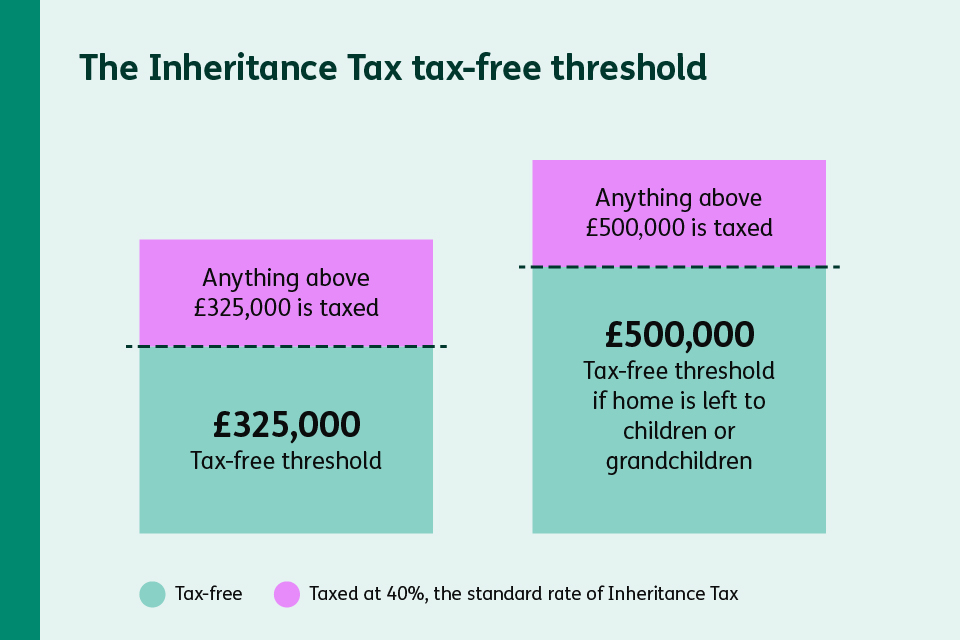
Inheritance Tax is only charged on the part of an estate that’s above the £325,000 tax-free ‘threshold’. A threshold is simply a financial limit. Anything above this £325,000 amount will be taxed at the standard rate of Inheritance Tax, which is 40%. A person’s tax-free threshold can increase to £500,000 if they leave their home to children or grandchildren.
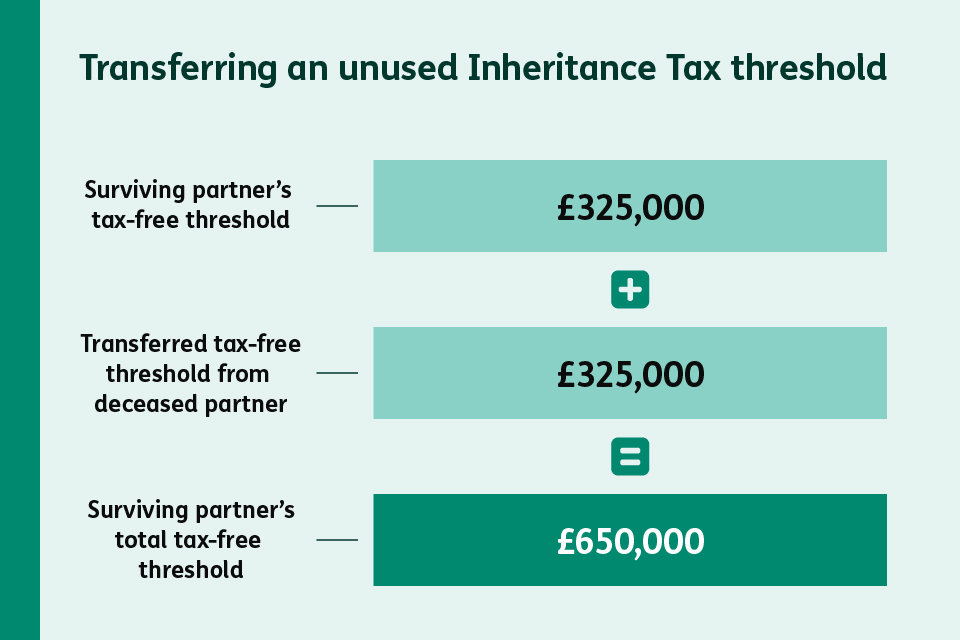
When a person who is married or has a civil partner dies, any of their unused tax-free threshold can be transferred to their surviving partner. This is on top of the surviving partner’s own tax-free threshold. This means the surviving partner’s new tax-free threshold could be as much as £650,000.
You can learn more about transferring unused thresholds on our Understanding Inheritance Tax page.
Key thing to remember:
From 6 April 2027, any unused pensions the person had may also be included as part of their estate.
Who pays Inheritance Tax?
Inheritance Tax is paid from the estate itself before any assets can be passed on.
When someone dies and leaves a will, it usually names one or more ‘executors’ who will deal with their estate.
When someone dies without a will (this is known as ‘intestacy’), their closest relative can apply to become the administrator of their estate.
It’s the executor or administrator’s job to pay any Inheritance Tax that’s owed to us, before they pass on anything from the estate that’s been left to you.
If you’re not an executor or administrator for the estate, then the Inheritance Tax should be dealt with before you actually inherit anything. However, there are some rare exceptions where we’ll contact you directly about Inheritance Tax.
This can happen if:
- your inheritance is held in a trust that can’t cover the tax that’s owed
- the executor or administrator didn’t pay the Inheritance Tax before you received your inheritance
- the person who died gave you a gift in the 7 years before their death (this depends on your relationship, the value of the gift, if it was a wedding gift and if it was a regular payment)
- the person who died gave you a gift during their lifetime but continued to benefit from it (for example, by living in a property they had given to you)
You can find more details about Inheritance Tax thresholds on GOV.UK.
You may need to pay other taxes
Even though you won’t usually pay tax on the inheritance once it’s been passed on to you, there can be other taxes to think about depending on what you’ve been left:
- Income Tax – if you earn money from your inheritance (for example, rent from a property or dividends from shares), this counts as income. You may need to pay Income Tax (GOV.UK) on it, just like your other income. If you’ve inherited a private pension, you may need to pay Income Tax depending on the type of pension – you can find out more about paying tax on inherited pension funds on GOV.UK.
- Capital Gains Tax – if you sell something you inherited and it’s gone up in value since you received it, you may owe Capital Gains Tax. This tax isn’t charged on the full amount you sell something for – it’s only charged on the ‘gain’ you make (that’s the difference between what it was worth when you inherited it and what you sold it for). You can find out more about Capital Gains Tax on GOV.UK.
Helpful tip:
Keep a copy of the value of any assets you’ve inherited in a safe place. That way you can easily show any gains if you sell them in the future.
Understanding the tax side of inheritance
The idea of estates and Inheritance Tax can be a lot to get your head round, particularly at a tough time.
But remember, most estates won’t have to pay any Inheritance Tax at all. And even if they do, this will usually be paid directly from the estate itself, before anything is passed to you.
If you’d like to know more, you can learn about the tax side of inheritance on GOV.UK.
Tell us what you think
We welcome your input to help us improve this website. Please take a few moments to complete our short website feedback survey about your experience.
The survey is anonymous, does not collect personal information, and consists of five optional rating questions.