
Handling someone’s finances after they’ve died
Losing someone is a very difficult time. And if you’re in charge of sorting that person’s finances, it’s understandable that you may feel overwhelmed. But you don’t have to be a tax expert to handle it all.
This page will take you through what you need to know, so that you can feel more in control and clear on the next steps during this tough time.
Someone needs to be in charge legally
If the person who died left a will, it will usually name one or more ‘executors’. This is what we call the people who will be in charge of dealing with the ‘estate’. The estate is everything the person owned – from property and personal belongings to savings and investments.
Helpful tip:
Being an executor is an important role, but you don’t have to manage it alone. A solicitor or professional advisor can help guide you through the process.
If the person who died doesn’t have a will, the estate is managed by an ‘administrator’ instead. This is usually the person’s closest living relative – normally their spouse (married partner) or civil partner. If you’re unsure who the administrator will be, you can find out what to do on GOV.UK.
The first step: valuing the estate
Before anything else can happen, you’ll need to work out how much the estate is worth. This means adding up their ‘assets’ (the name for everything the person owned) and taking away any debts they may have had.
So you’ll need to add up things like:
- property
- savings and investments
- personal possessions
- any gifts made in the seven years before death
And then take away any debts, such as:
- mortgages
- utility bills
- money owed on credit cards
- funeral expenses
Helpful tip:
From 6 April 2027, you’ll need to include the value of most types of unused pensions when valuing the estate.
You can find more guidance on valuing an estate on GOV.UK.
The next step: pay any Inheritance Tax
Inheritance Tax is charged on the value of someone’s estate when they die. In the UK, only around 5% of estates need to pay Inheritance Tax, so it’s not something everyone has to deal with. This is because anything left to a spouse or civil partner is usually free from Inheritance Tax.
Everyone has a tax-free ‘threshold’ for Inheritance Tax. A threshold is simply a financial limit. This currently means that if a person’s estate is worth less than £325,000, they won’t pay Inheritance Tax on it.
Anything above this £325,000 amount will be taxed at the standard rate of Inheritance Tax, which is 40%.
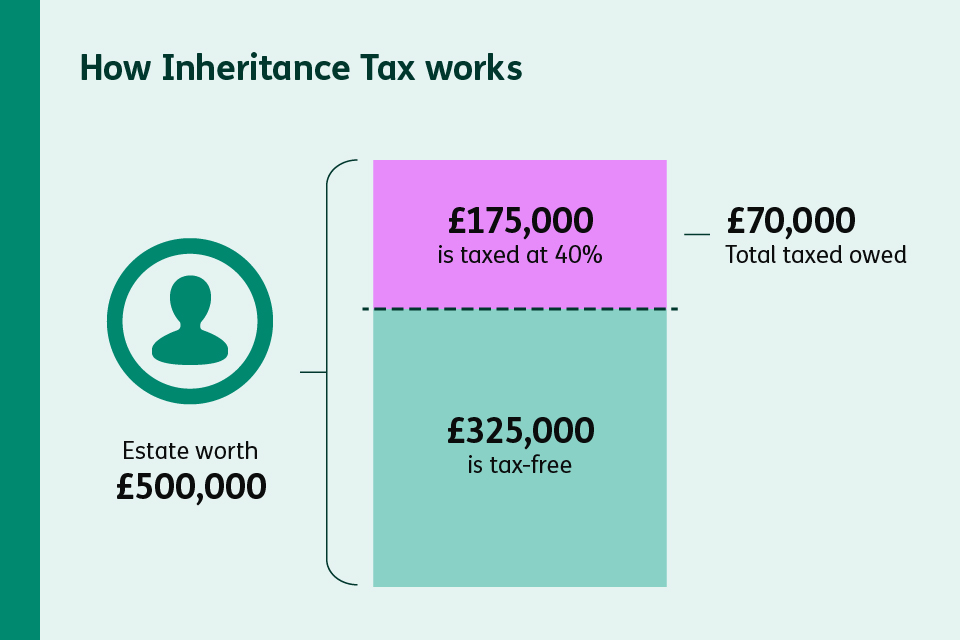
For example, if someone’s estate is worth £500,000:
- the first £325,000 is tax-free
- the remaining £175,000 is taxed at 40%
- the total tax owed is £70,000
Someone’s tax-free threshold may be higher:
- if they leave their home to their children or grandchildren
- if they were married or in a civil partnership and combine their tax-free threshold with their partner to make it bigger
You can find out more about these thresholds on our Understanding Inheritance Tax page.
Key thing to remember:
Inheritance Tax is usually paid from the estate itself, before anything is passed onto any friends or family. You can find out how and when you’ll need to pay Inheritance Tax on GOV.UK.
You can find out how and when you’ll need to pay Inheritance Tax on GOV.UK.
The final step: applying for probate
For some estates, you’ll need to apply for something called ‘probate’. This gives you the legal authority you need to handle the person’s finances – like accessing accounts, selling property, or giving out any inheritance.
Key thing to remember:
Before applying for probate, you’ll need to work out if the estate owes any Inheritance Tax. If it does, then you’ll normally need to start paying it before you can apply for probate.
If there’s no Inheritance Tax to pay, you’ll need the estimated value of the estate as part of your probate application.
You can find out more about probate and if you need to apply for it on GOV.UK.
Settling any other taxes and debts
As well as Inheritance Tax, there are a few other things to be aware of:
- the estate will need to pay any unpaid taxes and bills the person owed
- you might be able to get a refund for any taxes they overpaid
- there may be extra taxes to pay if the estate gets any new income after the person has died
You can find out more on how to deal with the estate of someone who’s died on GOV.UK.
There’s lots of help available
We know that handling someone’s finances can feel like a lot, especially at a difficult time. There’s lots of support available, and you can always consider hiring a solicitor or other professional advisor to help.
There’s also our Tell Us Once service on GOV.UK, which lets lots of government departments know about the person’s death in one go. It’s there to save you time and stress, when you’re already having to deal with a lot.
And if you’re an executor or administrator, the videos below can give you a bit more confidence through the process.
Overview: how Inheritance Tax works
Tell us what you think
We welcome your input to help us improve this website. Please take a few moments to complete our short website feedback survey about your experience.
The survey is anonymous, does not collect personal information, and consists of five optional rating questions.