
Financial support when you have children
There are lots of changes when you have a child. Of course, many of these are very exciting, but some can be quite daunting – like if your money situation changes.
We’re here to help and offer financial support to families such as Child Benefit. Read on to see how it works.
Regular Child Benefit payments
Child Benefit is a regular amount of money you get, tax-free, for every child you’re responsible for under the age of 16. In fact, if your child stays in certain types of education or training, you can keep getting their Child Benefit payments until they turn 20. We’ll explain more about how this works later.
At the moment, you’ll get £26.05 a week for your first or only child. Then another £17.25 a week for each additional child. And there’s no limit to how many children you can claim for.
You can claim Child Benefit on GOV.UK or on the HMRC app.
Child Benefit counts towards your National Insurance
Child Benefit counts towards your National Insurance record. So, if you claim Child Benefit – even if you choose not to get payments – you’ll automatically get National Insurance credits up until your child’s twelfth birthday. This will protect your State Pension if you’re not working and miss contributions in the future. You can find out more about how this works on our National Insurance page.
Claiming Child Benefit with a higher income
If you or your partner has an individual income of more than £60,000 a year and you still get Child Benefit payments, there may be a charge.
Key thing to remember:
This is called the High Income Child Benefit Charge (HICBC) – a charge that takes back some or all of the Child Benefit payment you’ve received.
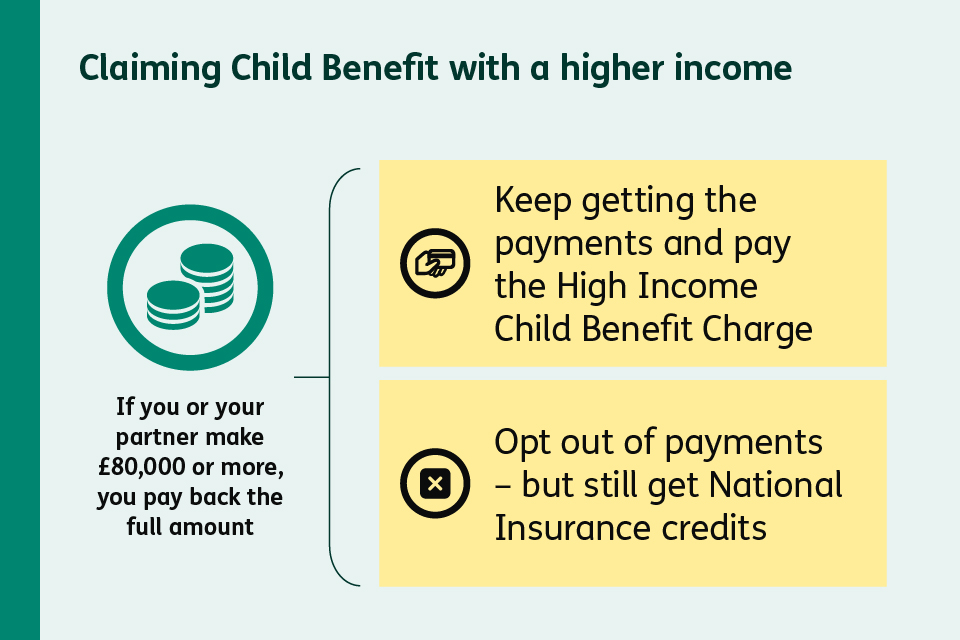
The charge isn’t the same for everyone – it depends on your income. For every £200 above £60,000, you pay back 1% of your Child Benefit. But if you or your partner makes £80,000 or more, you pay back the full amount.
If this is the case for you, you can:
- choose to keep getting the payments and pay the High Income Child Benefit Charge
- opt out of payments – but still get National Insurance credits
Helpful tip:
If you don’t want to pay the High Income Child Benefit Charge, it’s still worth claiming Child Benefit and opting out of payments anyway. This protects your National Insurance record. You can find out more on GOV.UK.
Child Benefit continues into further education
Child Benefit automatically stops on 31 August after your child’s 16th birthday. But if your child has chosen to stay in certain types of education or training, you might be able to keep claiming Child Benefit until they’re 20.
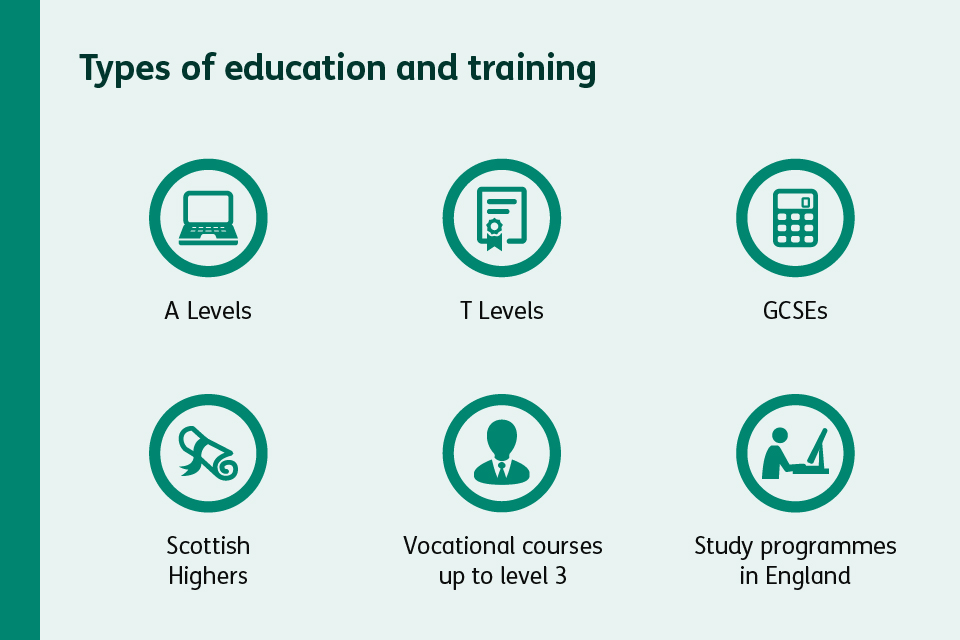
These types include:
A levels
T levels
GCSEs
Scottish Highers
Most vocational courses up to level 3
Study programmes in England
They’ll need to study more than 12 hours a week, on average – unless your child has an illness or disability which means they need to study less.
Key thing to remember:
You need to tell us that your child is staying in education to continue receiving Child Benefit. We’ll get in touch during your child’s last year of school asking about their plans. It’s quick and easy to extend your Child Benefit in the HMRC app.
You can find out how Child Benefit works once your child turns 16 on GOV.UK.
Changes to your family affect Child Benefit
It’s important that you let us know if your family or financial circumstances change, as this can affect your Child Benefit payments or whether you need to pay the High Income Child Benefit Charge we talked about earlier.
Key thing to remember:
Only one person can claim Child Benefit for a particular child. If your family splits up, it’s usually paid to the main carer. If you share care, you’ll need to decide who should claim. If you can’t agree, we’ll decide based on a range of information.
The person who claims Child Benefit must live with the child or contribute at least £26.05 a week to looking after them.
If you become a blended family, you’ll need to let us know. Your household will be seen as a single unit, so only one person will be able to claim the higher rate of Child Benefit for the eldest child in the blended family. You’ll need to update any Child Benefit claims you already have.
You can find out more about life changes that affect your Child Benefit on GOV.UK.
Getting started is simple
You can set up a claim, update your details, or tell us about any changes on GOV.UK or the HMRC app.
If your income is more than £60,000 a year, you can also use our online calculator on GOV.UK to work out how much of your Child Benefit you might need to pay back.