
Savings, investments and tax in working life
Most people who are employed pay Income Tax on their wages. But if you get interest from savings or money from investments, this can also count as income and can mean you need to pay more Income Tax.
On this page, we’ll take you through what you need to know about paying tax on your savings and investments while you’re working. If you’re retired, you can learn more on our Savings, investments and tax in retirement page.
How we work out your Income Tax
To work out how much Income Tax you owe, we add up all your income. You may get income from:
- your wages
- anything you earn through self-employment
- interest you get on savings
- money from investments
- property
Most people are allowed to get a certain amount of income each year that they don’t pay tax on. This is called your tax-free Personal Allowance. The current standard tax-free Personal Allowance is £12,570 a year – meaning you only pay tax on any income you get that’s above this.
You can find out more on our What is a tax-free Personal Allowance? page.
Some interest on savings is tax-free
You may be able to get some tax-free interest on your savings using what’s called an ‘allowance’. There are two saving allowances that you could benefit from – and some people can use both:
- Personal Savings Allowance
Get up to £1,000 in interest without paying tax on it (depending on what tax band you’re in). - the starting rate for savings
Get up to £5,000 in interest without paying tax on it, if the rest of your income (excluding any interest and dividends) is below £17,570. This allowance does get smaller based on your income, but we’ll explain more in the next section.
Understanding the Personal Savings Allowance
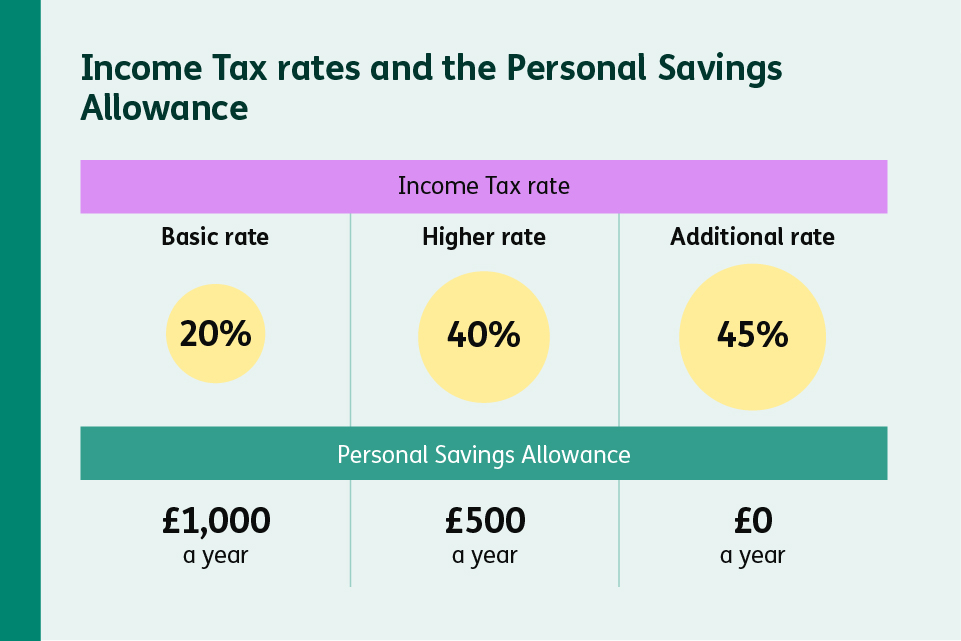
As well as a Personal Allowance, most people also get a Personal Savings Allowance. The Personal Savings Allowance is the amount of interest you can get from your savings before you need to pay tax on it. It depends on your Income Tax rate:
- if you pay Income Tax at the basic rate (20%), your allowance is £1,000 a year
- if you pay Income Tax at the higher rate (40%), your allowance is £500 a year
- if you pay Income Tax at the additional rate (45%), you don’t get this allowance
Scotland has different Income Tax rates. Find out more about Scottish rates on GOV.UK.
Understanding the starting rate for savings
With the starting rate for savings, you can get up to £5,000 in interest without paying tax on it. However, you can only use this if your other income, excluding any interest and dividends, is below £17,570 – and the allowance does get smaller the more you make elsewhere, such as from your wages.
If your other income, excluding any interest and dividends, is £17,570 or more
You can’t get the starting rate for savings.
If your other income, excluding any interest and dividends, is less than £17,570
Your starting rate for savings is a maximum of £5,000. This goes down by £1 for every £1 of income that’s above your Personal Allowance.
Key thing to remember:
The current standard tax-free Personal Allowance is £12,570 a year.
Find out more about the starting rate for savings on GOV.UK.
Here are two examples.
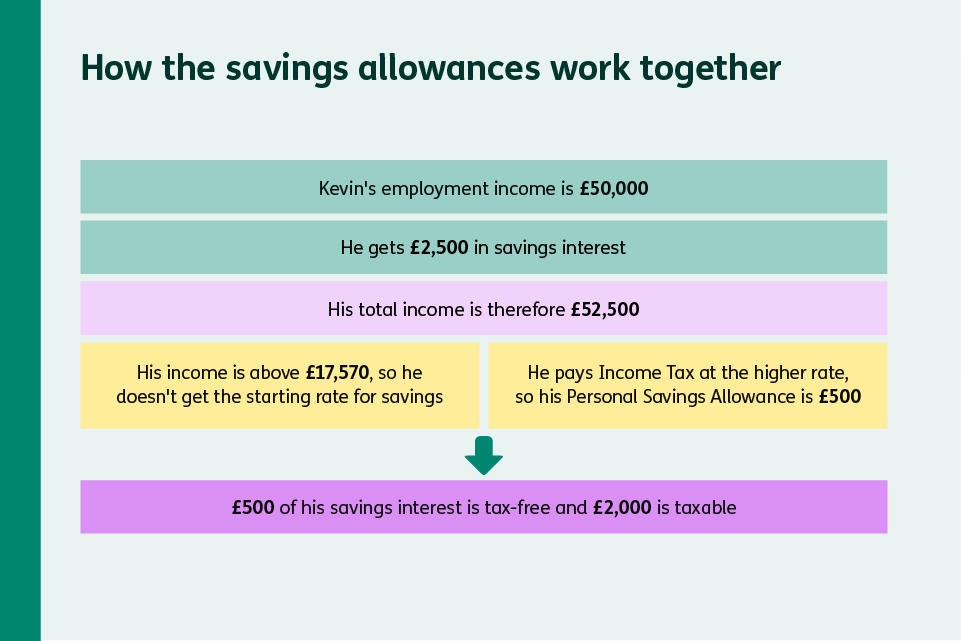
Kevin’s income from employment is £50,000 a year.
Kevin also got £2,500 in savings interest that year.
This means Kevin’s total income for the year is £52,500.
Because Kevin’s income (excluding any savings interest and dividends) is more than £17,570, he doesn’t get the starting rate for savings.
Kevin’s income falls within the higher Income Tax rate we mentioned earlier, so his Personal Savings Allowance is £500.
This means that £500 of Kevin’s savings interest is tax-free.
The remaining £2,000 of Kevin’s savings interest is taxable.
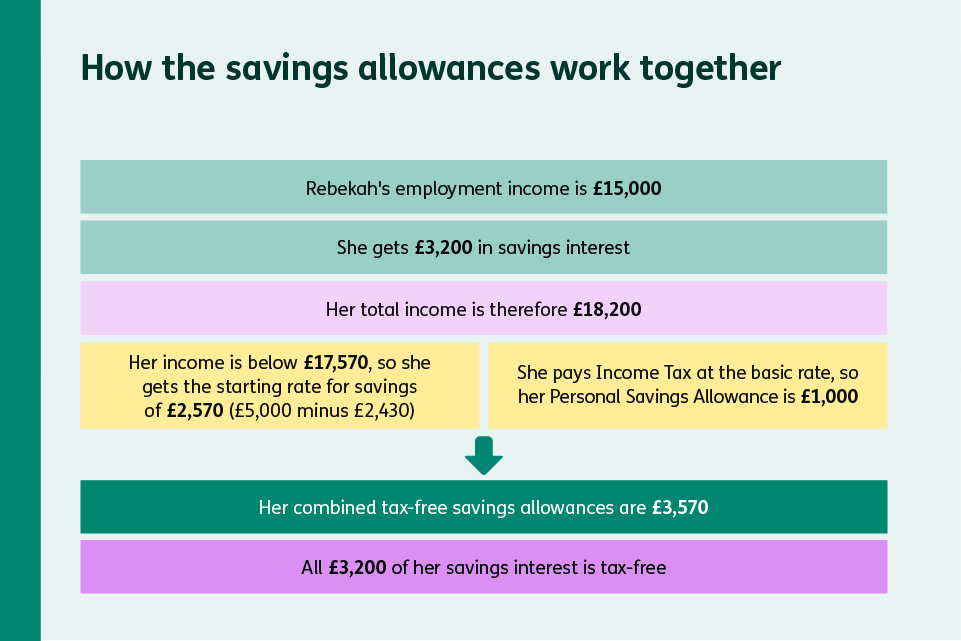
Rebekah’s income from employment is £15,000 a year.
Rebekah also got £3,200 in savings interest that year.
This means Rebekah’s total income for the year is £18,200.
Because Rebekah’s income (excluding any savings interest and dividends) is less than £17,570, she gets the starting rate for savings.
Rebekah’s income (excluding any savings interest and dividends) is £2,430 more than her Personal Allowance of £12,570. This reduces her starting rate for savings from £5,000 to £2,570.
Rebekah’s income falls within the basic Income Tax rate we mentioned earlier, so her Personal Savings Allowance is £1,000.
This means Rebekah can get up to £3,570 of savings interest tax-free (£2,570 from the starting rate for savings and £1,000 from her Personal Savings Allowance).
Because Rebekah received £3,200 in savings interest, all of this is tax-free.
Dividends also have a tax-free allowance
If you have any investments or you own shares, you might receive something called ‘dividends’. This is when a company makes a profit and pays out a share of that profit to you.
Most people get a dividend allowance, so you can get up to £500 a year in dividends before paying tax on them. Dividends above this amount count towards your total income and could affect your Income Tax.
Your dividend allowance is separate to your savings allowances. Find out more about tax on dividends on GOV.UK.
How selling investments can impact your tax
If you sell an investment (like shares not held in an ISA or crypto assets) for more than you paid for it, then you may need to pay something called Capital Gains Tax.
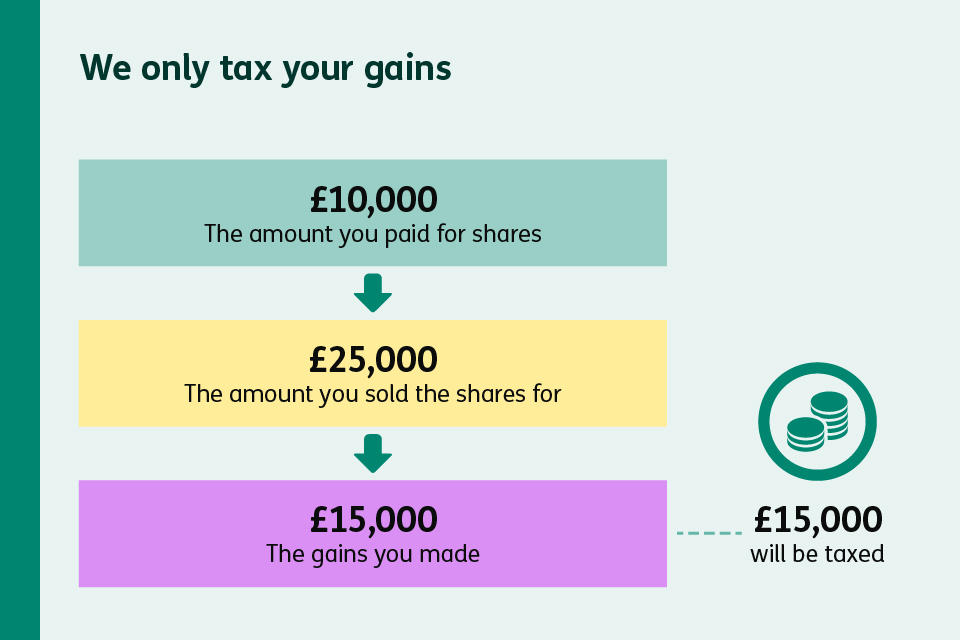
Capital Gains Tax is different to Income Tax. It isn’t charged on the full amount you sell something for – it’s only charged on the ‘gain’ you make. That’s the difference between what you originally paid and what you sold it for.
Here’s an example:
- you bought shares for £10,000
- you then sell them later for £25,000
- the gain you made is £15,000 – so you’ll only be taxed on this amount
Just like for your income and savings interest, you have a tax-free amount before Capital Gains Tax applies. Find out more about Capital Gains Tax allowances on GOV.UK.
Interest and Individual Savings Accounts (ISAs)
Interest that you get from money within an ISA is tax-free no matter how much you make, so it doesn’t count towards your savings allowances. That’s the case whether the money comes from savings interest, dividends or investments.
Key thing to remember:
There’s a limit as to how much you can put into a cash ISA each year. In the 2026 to 2027 tax year, the limit is £20,000 and in the 2027 to 2028 tax year, the limit for a cash ISA will be £12,000 if you’re under 65 years old, or stay at £20,000 if you’re 65 or over.
You can find out more about ISAs on GOV.UK.
When to do a tax return
If your income from savings interest is more than £10,000 a year, or you receive more than £10,000 of dividends a year, you’ll need to fill out a Self Assessment tax return.
Don’t worry, there’s lots of support to help you fill it out. You can find all you need to know on our Self Assessment page.
You’ll need to include any profit you’ve made and any Capital Gains Tax you owe on your tax return too.
Savings and investments income less than £10,000
If your income from savings interest is less than £10,000 and you receive less than £10,000 in dividends a year, then you don’t need to send us a tax return, unless you already complete one for another reason.
If you receive dividends of more than £500, although you don’t need to do a tax return, you will still need to let us know. You can do this by logging in to your personal tax account on GOV.UK and going to ‘Check your Income Tax’ then ‘Tell us about a change’.
We’ll try to automatically collect any tax you owe through your wages before you’re paid. We’ll do this by changing your tax code, then send you a letter explaining what we’ve done.
If we can’t collect what you owe this way, or you owe more than £3,000, we’ll send you a Simple Assessment letter. A Simple Assessment is simply a letter from us that lets you know what tax you owe and how to pay. It’s a totally normal process and often happens if your savings income is quite high, or if you have income from investments that haven’t been taxed yet.
Find more information on Simple Assessment, including how to pay, on GOV.UK.
Let us know if something looks incorrect
If you think you should be paying tax on your savings income but haven’t heard from us by 31 March of the following tax year, you should let us know. You can also let us know if you expect to get less savings interest in the future. For example, you might have been saving for home improvements and you’ve now spent your savings doing these.
You can let us know about updates to your savings income by logging in to your personal tax account on GOV.UK.
Helpful tip:
Make sure you check any letters from us. If anything looks incorrect, let us know as soon as possible and we can sort it out. You’ll need to let us know within 60 days of receiving a Simple Assessment letter.
5 key things to remember
The starting rate for savings and Personal Savings Allowance mean most people can get some interest from savings, tax-free.
Dividends and money you get from investments have their own tax-free allowances – and some people can use all of these different allowances together.
You need to let us know if you get more than £500 in dividends.
You don’t pay tax on interest from your ISAs.
If your income from savings interest or dividends is above £10,000 a year, you’ll need to do a Self Assessment tax return. And you’ll need to let us know about any dividends over £500.
We know this can feel like a lot to take in, but taking the time to understand your saving and investment allowances will help you feel more confident about managing your tax.