
Earning extra income from a 'side hustle'
Whether you’re selling things online, dog walking, doing deliveries at weekends, or anything else to make some extra money, if it’s outside of your main job, you may need to tell us about this income and may have to pay tax on it.
There’s a tax-free trading allowance
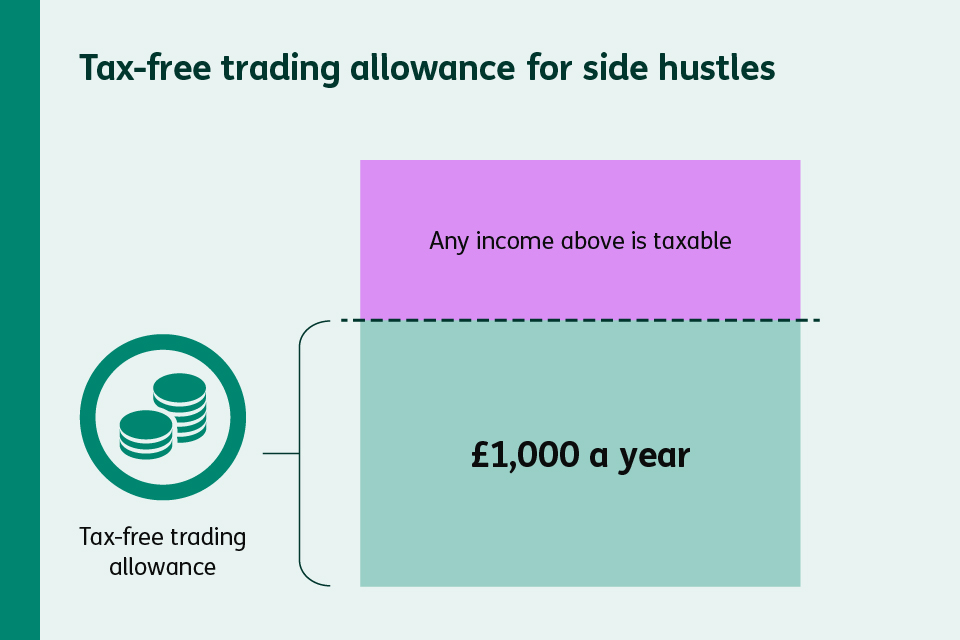
Most people can earn £1,000 from ‘side hustles’ before they need to tell us about it. This is called your tax-free trading allowance.
If you earn above £1,000 from side hustles in a tax year (that’s 6 April to 5 April), you need to let us know by using the income checker tool on GOV.UK.
You’ll only pay tax on any money above your £1,000 trading allowance. You can also claim back any money you’ve spent on your side hustles against any tax you owe. You can’t claim expenses and use your trading allowance together though. It’s one or the other.
Helpful tip:
When you’re doing your tax return, make sure you add up all your expenses, before choosing to use your trading allowance. If your expenses are more than £1,000, you may want to claim these instead of your allowance.
The rules are slightly more complicated for trading and property allowances. Find out more about how they work on GOV.UK.
Key thing to remember:
The tax-free trading allowance is for all of your side hustles and self-employed jobs. So, if you earn money from more than one place, you need to add it all together to see if your total extra income is above £1,000.
Here’s an example:
Jake earned £500 from delivery driving.
He also earned £800 from selling crafts.
Jake earned £1,300 in extra income that year, so he needs to do a tax return.
Jake spent £400 that year on craft materials and fuel. These were his expenses.
Because Jake’s trading allowance was more than his expenses, he chose to claim that.
Jake takes away the £1,000 from the £1,300 he earned. He’ll only pay Income Tax on the £300 that’s above his allowance.

There’s a tax-free property allowance
Most people can earn £1,000 from property income before they need to tell us about it. This is called your tax-free property allowance.
If you earn above £1,000 from property in a tax year (that’s 6 April to 5 April), you need to let us know by using the income checker tool on GOV.UK.
You’ll only pay tax on any money above your £1,000 property allowance. You can also claim back any money you’ve spent on your property against any tax you owe. You can’t claim expenses and use your property allowance together though. It’s one or the other.
Renting out a room in your home
Another option is the ‘Rent a Room Scheme’. If you rent a furnished spare room out to someone, it lets you make up to £7,500 a year from it, tax-free. The scheme also counts for rooms rented out through an online platform, as long as it’s a room in your main home that comes with furniture already in it.
If someone else shares rent from letting out the same property, the tax-free amount is halved to £3,750.
If you make more than £7,500 a year from renting out a room, income tax is due and you may need to fill out a tax return. You can find out how to do this on our Self Assessment and Making Tax Digital for Income Tax pages.
Key thing to remember:
You can’t use the Rent a Room Scheme on any room that doesn’t come with furniture.
You cannot use your tax-free property allowance to cover income which exceeds your Rent a Room Scheme threshold, or if you have chosen to claim expenses instead of Rent a Room Scheme relief.
You can claim Rent a Room Scheme relief for income from letting room in your own home and also claim the tax-free property allowance against income you receive from letting other property.
You can also find out more about the Rent a Room Scheme and whether it might work for you on GOV.UK.
Renting out your driveway or parking space
Some people don’t have a spare room but can make some extra money from space they’re not using outside – like a parking space, driveway, or storage area. And the £1,000 tax-free property allowance works for this too. It’s separate to your £1,000 tax-free trading allowance.
Key thing to remember:
Rent a room is renting out furnished rooms in your own home. Property allowance is for any other properties you own including driveways etc.
Selling your own belongings
Don’t worry, if you make money from selling things you no longer want – like clearing out old clothes, furniture, or other personal items you own from time to time – you don’t usually need to tell us.
But if, for example, you buy things especially to sell them to make money – and make more than £1,000, you do.
Find out exactly what applies to you
Helpful tip:
If you’re not sure how your extra income should be taxed, take a look at our Tax Help for Hustles site. It has simple tools to help you check, and you don’t have to give us any personal details.
Whatever you do to make extra income, you’ll find it useful to keep a good record of all the money you make somewhere safe – like on your phone or laptop. If you do need to do a tax return later, having this information to hand will make it much easier.
And once you know where you stand, you can go into your next side hustle feeling tax confident.